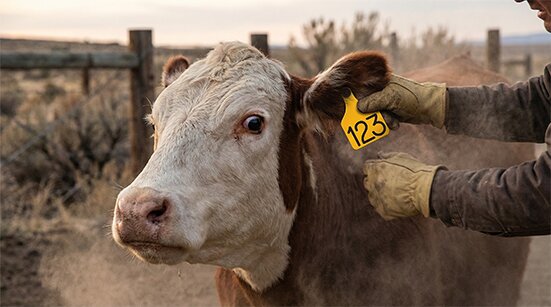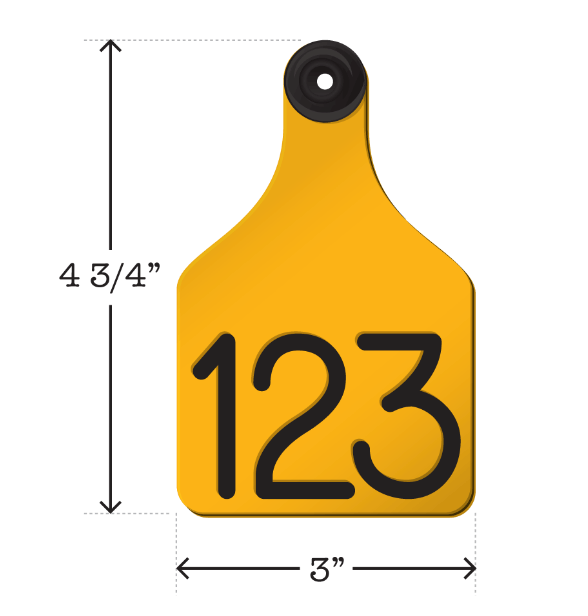

QUICK ANSWER: Some cattle ear-tag loss occurs even in well-managed systems. Published field results support using roughly 3–5% as a practical reference for young cattle over a season or about a year. It is not a universal definition of “normal.” Losses approaching 10% in the same recently tagged group should not be dismissed as ordinary background loss.
A missing tag usually leaves clues. What remains in the ear, how soon losses started and whether several cattle share the same pattern can help identify the first place to look. The goal is to correct the cause before more identification is lost.
What is a normal cattle ear-tag loss rate?
There is no single loss rate that applies to every operation. Tag design, animal age, time in the ear, placement, environment and the way retention is measured all matter. However, published field work gives ranchers a useful frame of reference:
-
A one-year field trial involving 102 dairy cattle reported 96.1% retention for the best-performing visual tag—equal to 3.9% loss. View study
-
A Canadian Cattle Identification Agency study following more than 2,000 calves and 1,000 yearlings reported greater than 96% retention in calves and 99% retention in yearlings using approved RFID tags. View report
-
The same Canadian project found average retention of 82% in mature cows followed for as long as four years, showing that cumulative lifetime loss is a different question from losses in a newly tagged group.
Taken together, those results make 3–5% a reasonable practical reference for field loss in younger cattle over a limited period. It should not be presented as an industry standard or a guarantee. Official EID tags are held to a stricter U.S. requirement: no more than 1% loss annually or 3% over three years. USDA standard
WHEN TO STOP AND INVESTIGATE: When losses approach 10% of the same recently tagged group—particularly within the first few weeks or months—it is time to look for a shared equipment, application, placement, environmental or product factor. In a small group, several similar losses may justify investigation even before the percentage reaches 10%.
Why do cattle ear tags fall out? Start with these five checks
1. Match the tool pin to the button—not just the tagger
The applicator body may accept several tag systems, but the tool pin must match the button being installed. For Ritchey two-piece tags, use a Ritchey Tool Pin with a Ritchey Clover Button. If you use another manufacturer’s button, use the matching pin. A mismatched pin can damage or distort the button and prevent a secure connection. Ritchey Ear Tag Tool Pin Guide
Before tagging a group, confirm the button manufacturer and inspect the matching pin for bends, burrs, looseness or wear.
2. Check the applicator before the first animal enters the chute
A worn or misaligned tagger can turn a good tag into a poor connection. Cycle the applicator empty. The jaws should move freely, meet squarely and bring the pin to the center of the opposite jaw. Then load one set and make sure each component is fully seated and aligned.
-
The pin is straight, tight and undamaged.
-
The jaws close squarely without twisting.
-
The Clover Button is fully seated on the pin and the tag panel is seated squarely in the opposite jaw.
-
The tagger operates smoothly in one firm motion.
If you find a shared equipment problem after several animals have been tagged, pause and correct it before continuing. Five minutes at the chute can save hours of reconstructing records later.
3. Choose sound tissue within the middle-third placement zone
For a Ritchey visual tag, think of the middle third of the ear as a placement zone—not one perfect dot. Within that zone, choose a flat patch of healthy tissue between the cartilage ribs and away from visible blood vessels. Look at both sides of the ear before closing the applicator.
Before applying the tag, confirm that:
-
The new hole will pass through flat tissue between the cartilage ribs—not through a rib or major blood vessel.
-
The site is surrounded by intact tissue and is separate from an old hole, tear, notch or visibly damaged area.
-
The tag is far enough from the outside edge that the ear can resist leverage if the tag catches on brush, a bunk or fencing.
-
There is enough distance from the head for the tag to move freely without pinching or binding.

Cattle ear-tag placement diagram showing a visual tag positioned in the middle portion of the ear between the two cartilage ribs.
If I remove a calf tag, where should the replacement go?
Do not put the new tag through the exact tract left by the old tag. Choose another sound spot within the middle-third zone, leaving a clear bridge of intact tissue so the two openings cannot merge.
If the placement zone is crowded or compromised, use the opposite ear when that fits your identification plan. If neither ear offers a clean site—or the old hole is torn, enlarged, inflamed or draining—consult your veterinarian before retagging. If a temporary calf tag will later be replaced, reserve an open placement zone or use the intended long-term tag from the beginning.
4. Take five seconds to check the finished connection
Do not assume the audible click means the job is finished. Before releasing the animal, look at the connection from both sides.
-
The button’s stud is fully engaged with the tag panel.
-
The button is not cracked, pierced, shaved or distorted.
-
A gentle check confirms that the components remain connected and locked.
-
There is visible airspace; the tag is not clamping the ear.
-
The tag moves or rotates freely without binding. If it does not, check the placement, airspace and connection before releasing the animal.
That quick finish check is especially valuable on the first few cattle in a group, after changing a pin, or whenever a different person takes over the tagger.
5. Walk the pen at ear-tag height
Any tag can be pulled out if enough force is applied. The trouble is that many tag traps look harmless from the aisle. Check the places cattle actually put their heads, and run a gloved hand along likely contact points.
-
Feed-bunk edges, headlocks and damaged feeder panels
-
Hay rings, bale feeders, net wrap, baler twine and fence wire
-
Protruding hardware, open pipe ends and narrow gaps in metal panels
-
Brush, low branches and crowded handling areas
If losses build over weeks or begin after cattle are moved, the environment deserves special attention.
A lost tag leaves three clues
A missing tag alone does not identify the cause. Start with what remains, examine the ear and then look for a pattern among the affected cattle.
1. What remains in the ear?
The button remains, but the tag panel is gone. The button alone cannot show whether the original connection was fully locked. Inspect it for cracking, bending, piercing or other damage. Then verify the tool pin and applicator setup and compare intact tags from the same tagging session. Check every applicator used during the tagging session—including one supplied by a neighbor or helper.
The tag and button are both gone. The missing components provide little evidence by themselves, so the condition of the ear becomes the next clue.
2. What does the ear look like?
A torn or slit hole points toward a snag and tear-out. Check the original placement and nearby catch points.
A round but enlarged hole may reflect gradual stretching, weakened tissue, restricted movement or repeated rubbing.
Little visible damage means the ear alone may not reveal the cause. Compare other cattle tagged at the same time or with the same equipment.
3. Do the losses form a pattern?
Several losses soon after one tagging session point toward a shared factor. Pause and check the tool pin, applicator, loading, placement, operator and product lot.
Losses that build over time or begin after cattle are moved point first toward the environment.
One lost tag may be an isolated snag or animal-specific problem. Check that animal, then watch the group for additional losses.
Before you retag
Correct the likely cause and choose a new site in sound tissue. If several cattle show the same loss pattern, contact Ritchey before retagging the entire group. Have the number tagged and lost, tagging and first-loss dates, recovered components, equipment details, product lot and clear photographs available.
THE BOTTOM LINE: A little tag loss can happen. A cluster is evidence. Read the ear, compare the affected cattle and correct the shared factor before retagging. For help, contact Ritchey at 1-800-327-8247 or sales@ritcheytags.com.